Ivrea, Viverone, and Santhià
Today kicked off early—5:35 a.m., a full hour earlier than usual. With the temperature forecast climbing near 100°F, I knew it would be a tough day. Two stages were planned, though, in hindsight, I might’ve opted for just one. Still, that early start gave me a head start, allowing me to experience the cool silence of the morning.
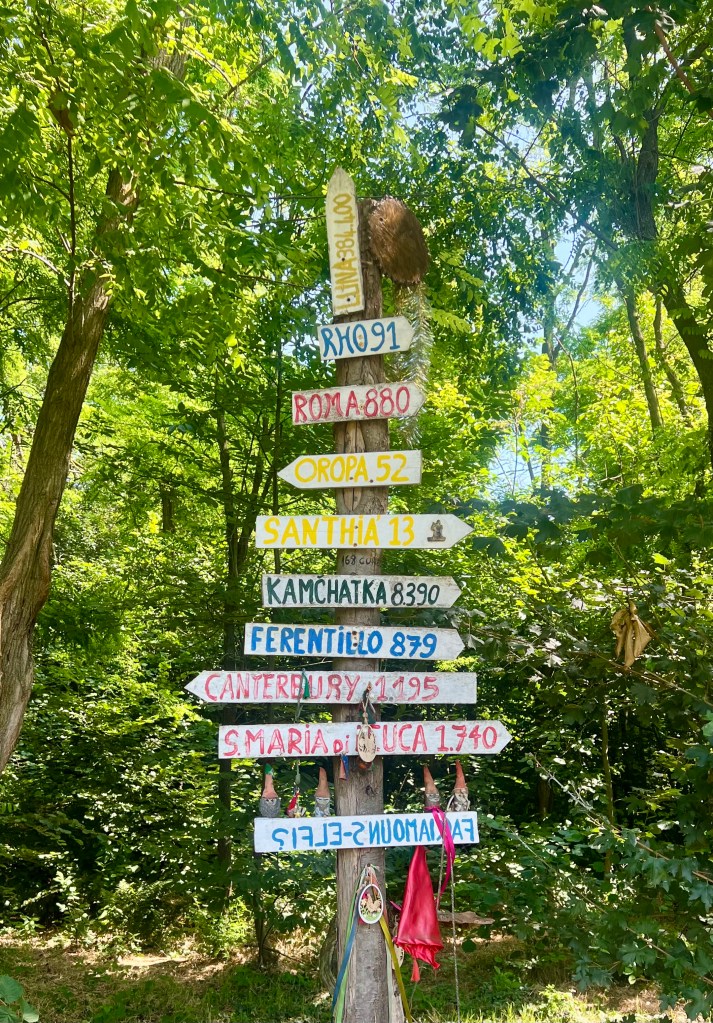
I made my way out of town and into the forest trails. The crisp morning air and the soft crunch of earth beneath my boots set the stage for a peaceful, almost meditative walk—just what I needed to clear my mind. There’s something so grounding about being alone among trees at dawn.
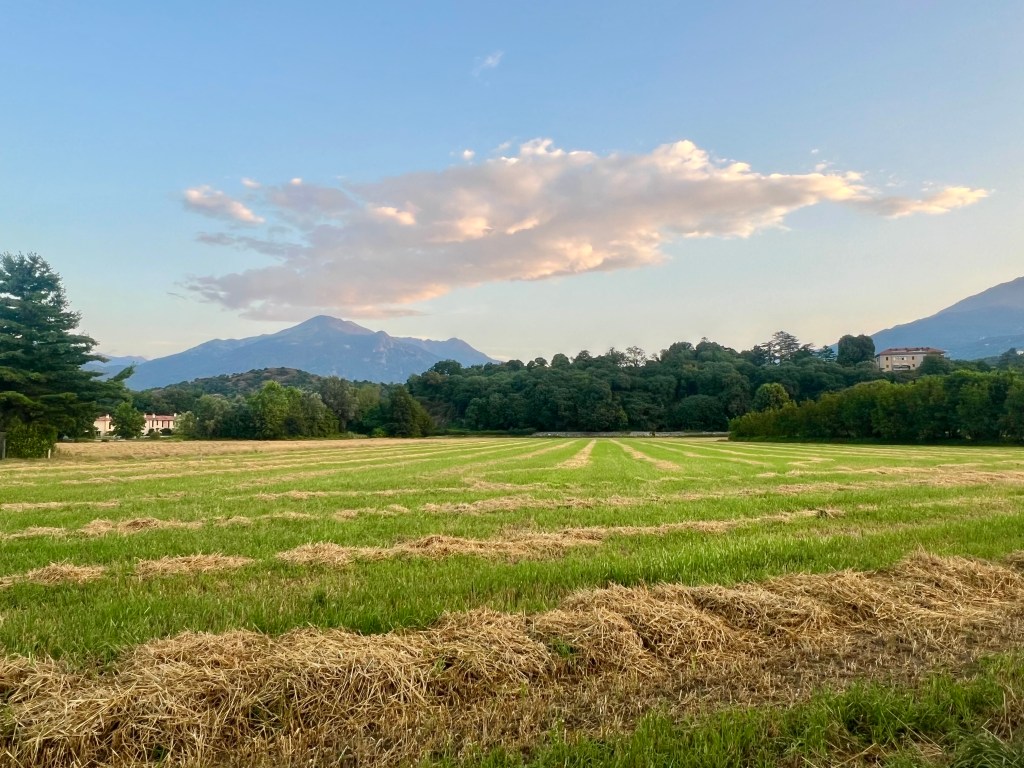
By 7:00 a.m., the sun had risen over the mountains, and the heat began to build quickly. I passed several tennis centers—both grass and clay. The presence of such high-quality facilities in small towns like this was unexpected.
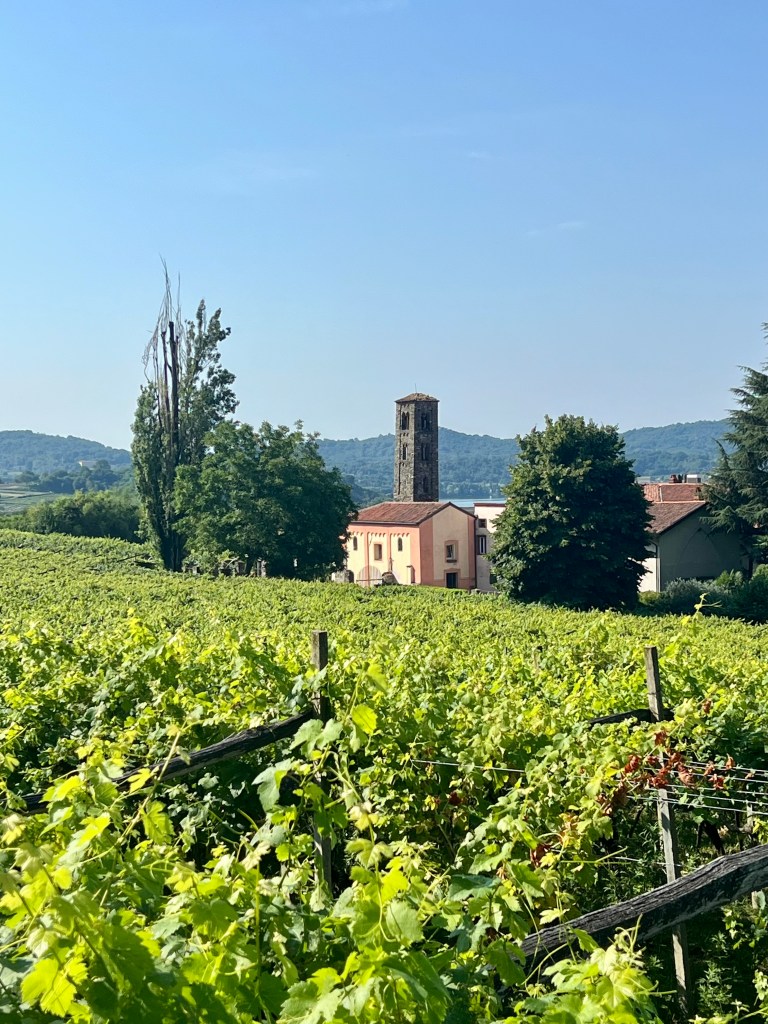
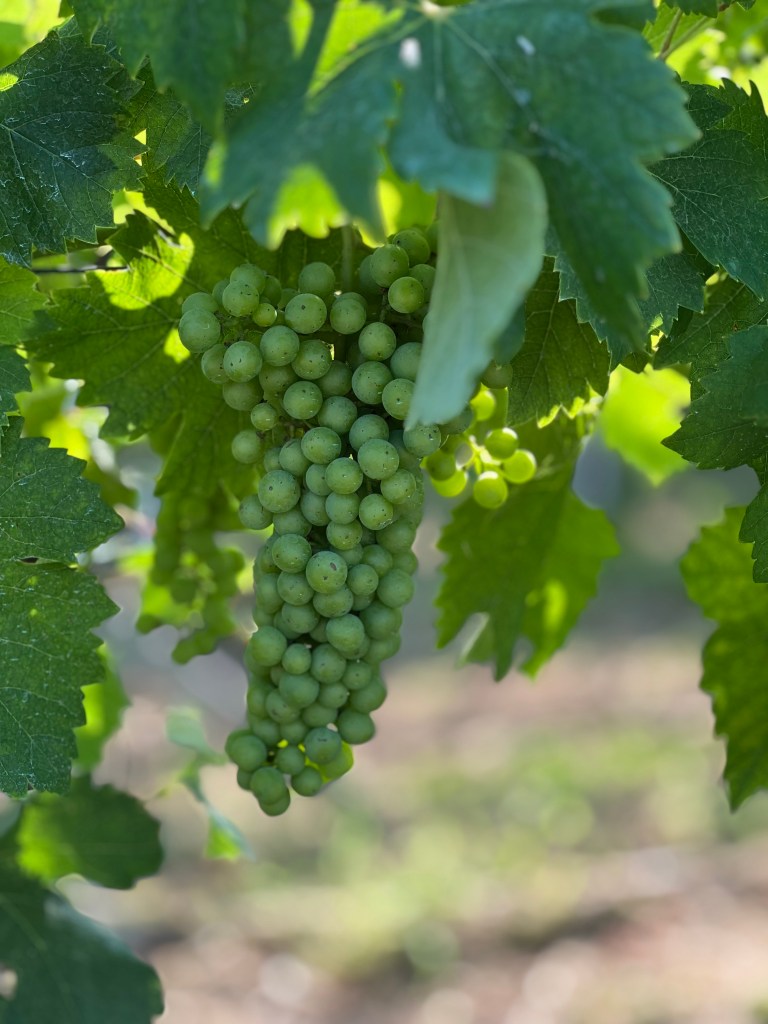
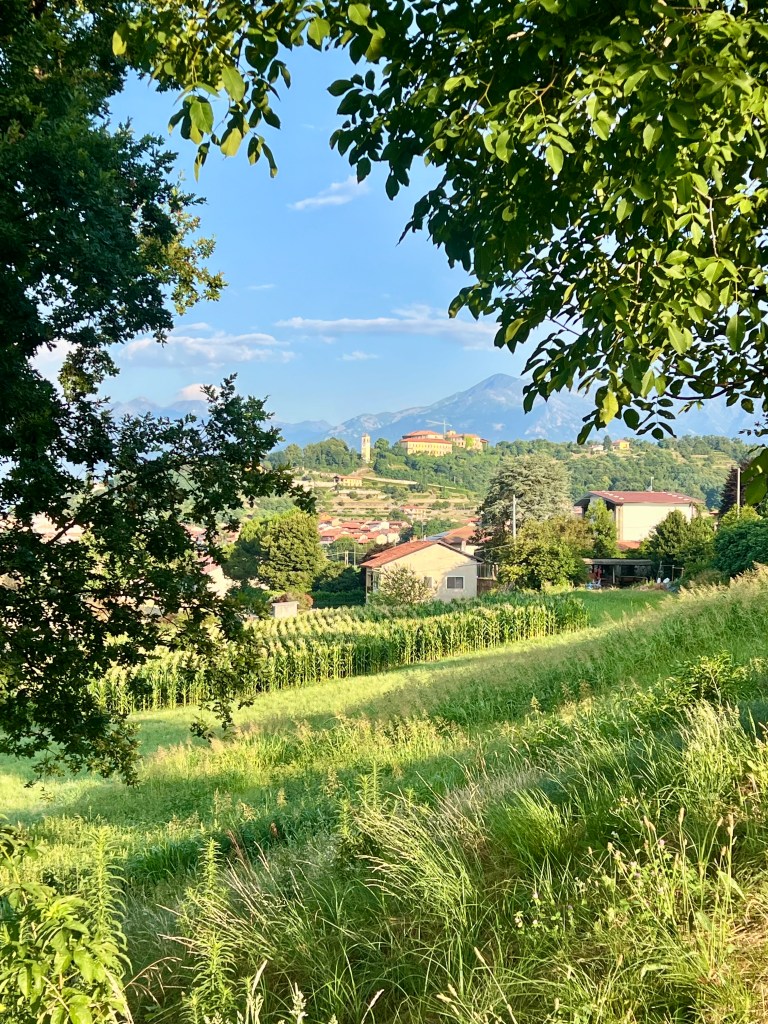
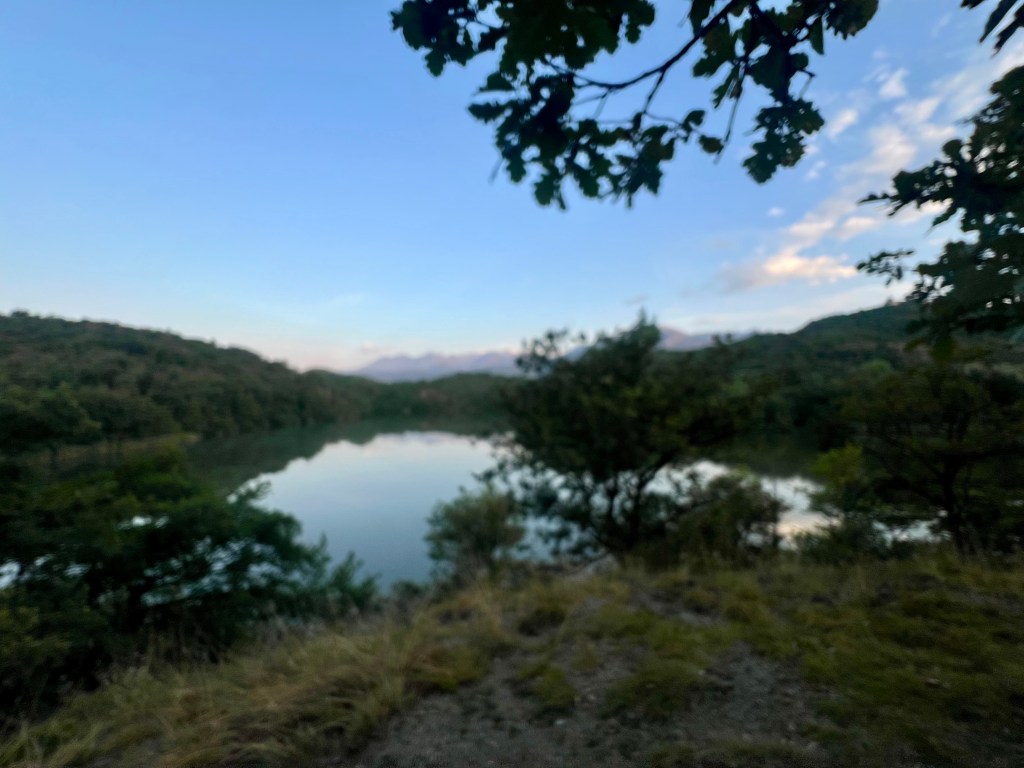
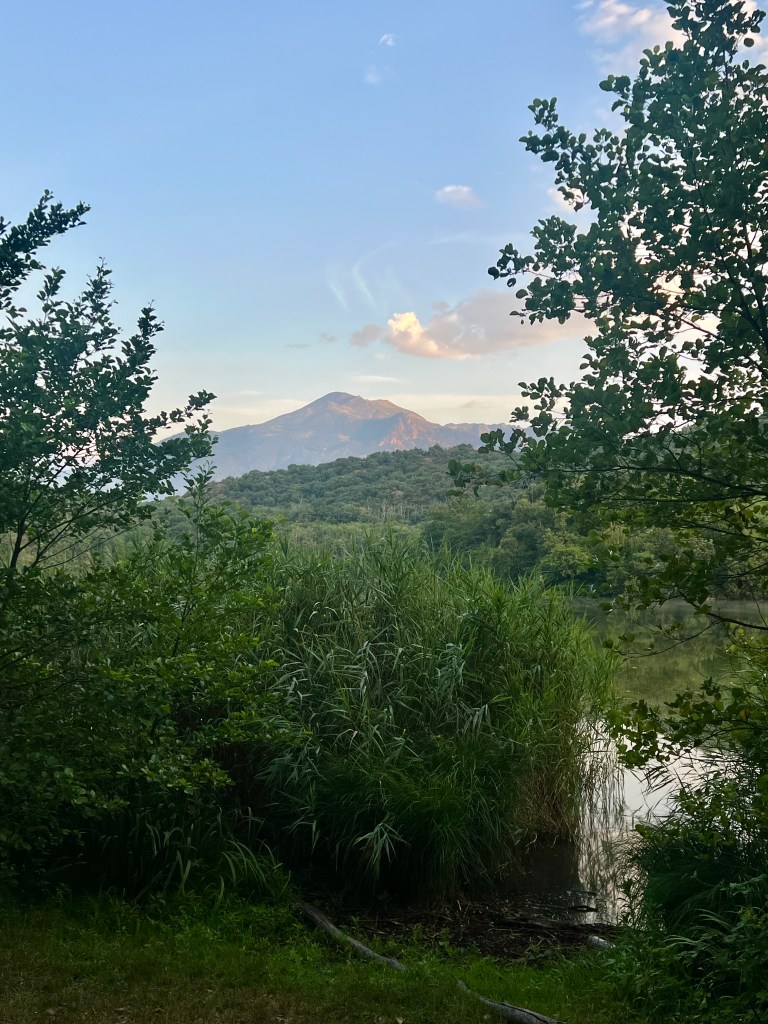
As I continued, the scenery unfolded with rolling vineyards and the majestic lakes of the region, creating a perfect summer postcard. One of the day’s highlights was walking beside Lake Viverone, where the water stretched out before me, reflecting the low-lying hills in the distance.
This glacial lake, the third-largest in the region, is renowned for its crystal-clear waters, offering activities like boating, fishing, and birdwatching. It’s also an ancient site, with prehistoric pile dwellings discovered along its shores, some dating back to the Bronze Age.
The town of Viverone itself is charmingly quiet, rooted in agriculture, particularly hazelnut farming, which plays a key role in regional desserts. I enjoyed a glass of local Erbaluce wine, paired with refreshing cold water—not typical of me while hiking, but perfect in the late morning heat. Viverone feels like a place that cherishes its traditions.
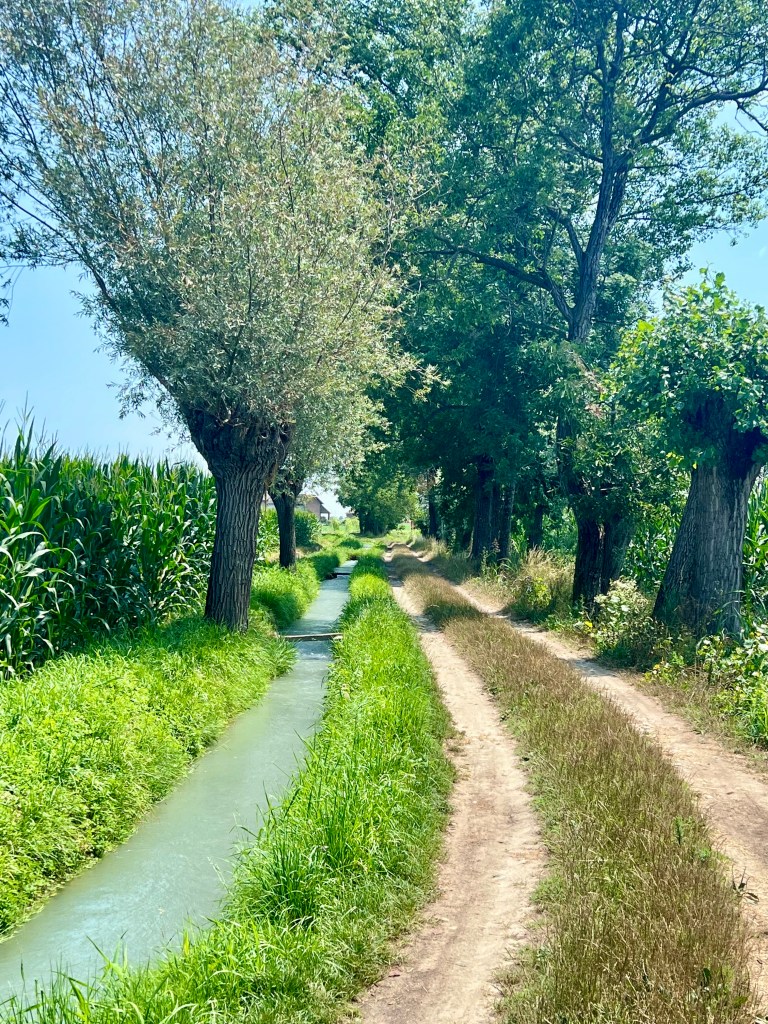
I continued south, where the land begins to mark the start of the Po Valley, Italy’s agricultural heartland. The Po River, Italy’s longest river, cuts through the valley, and the Rogge canals, which divert water from tributaries, ensure that the farmland remains productive even during dry spells.
Arrival in Santhià
Finally, I made it into Santhià—tired but satisfied after completing two tough stages. The town feels like a crossroads, small but with a steady pulse of movement, likely from travelers and pilgrims passing through.
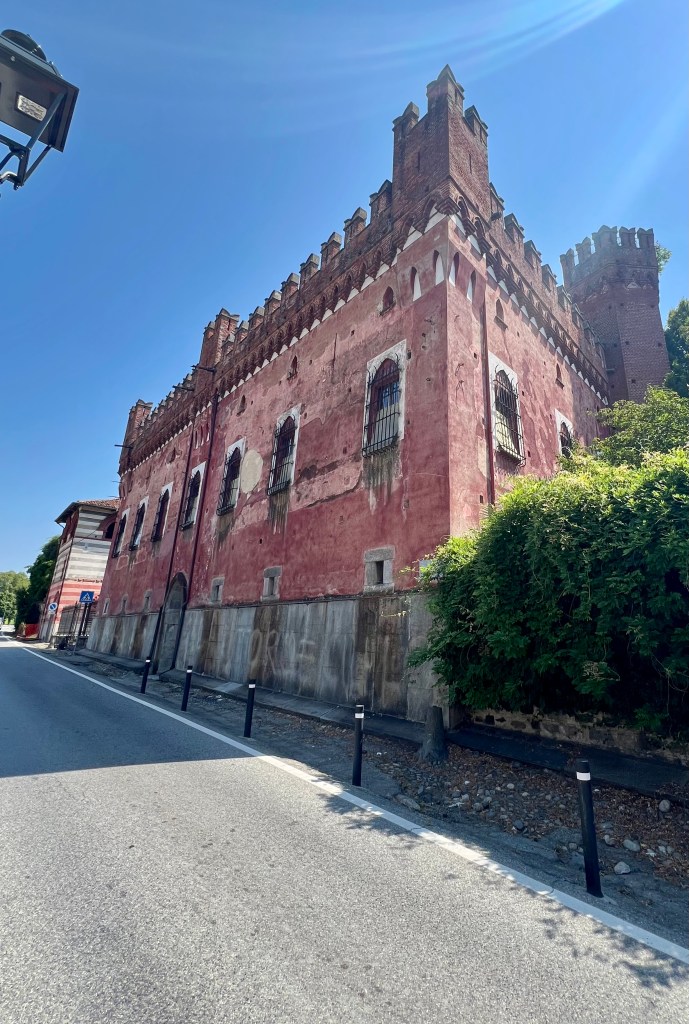
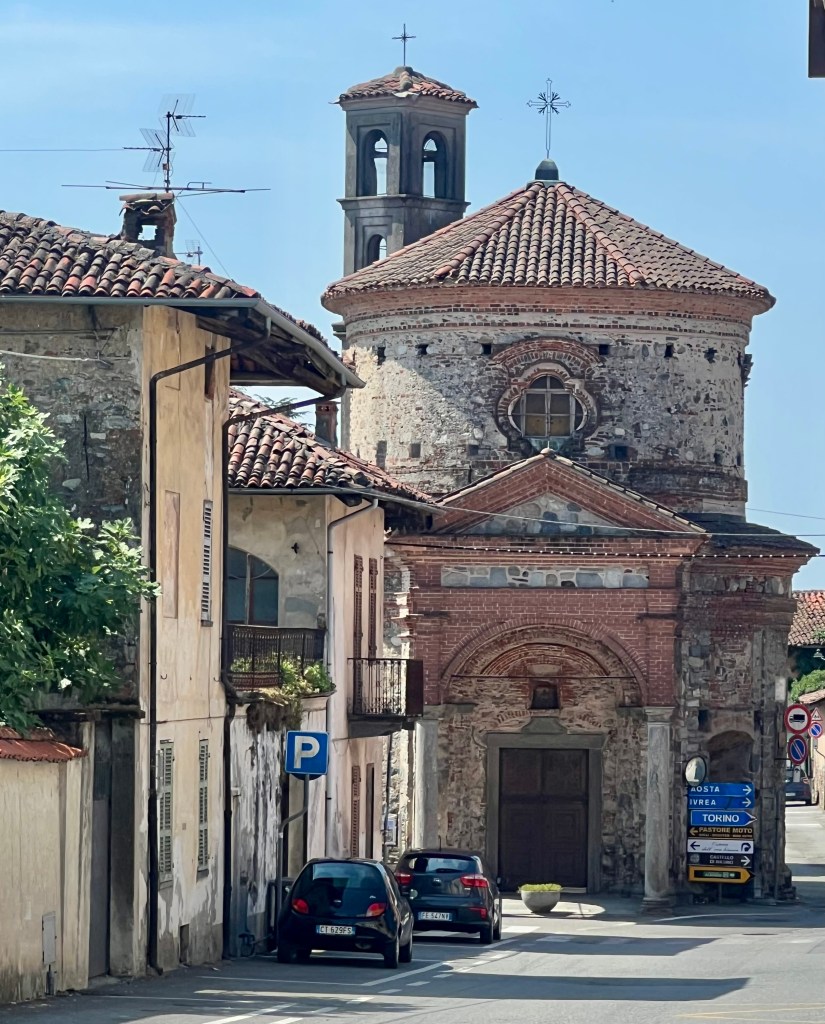
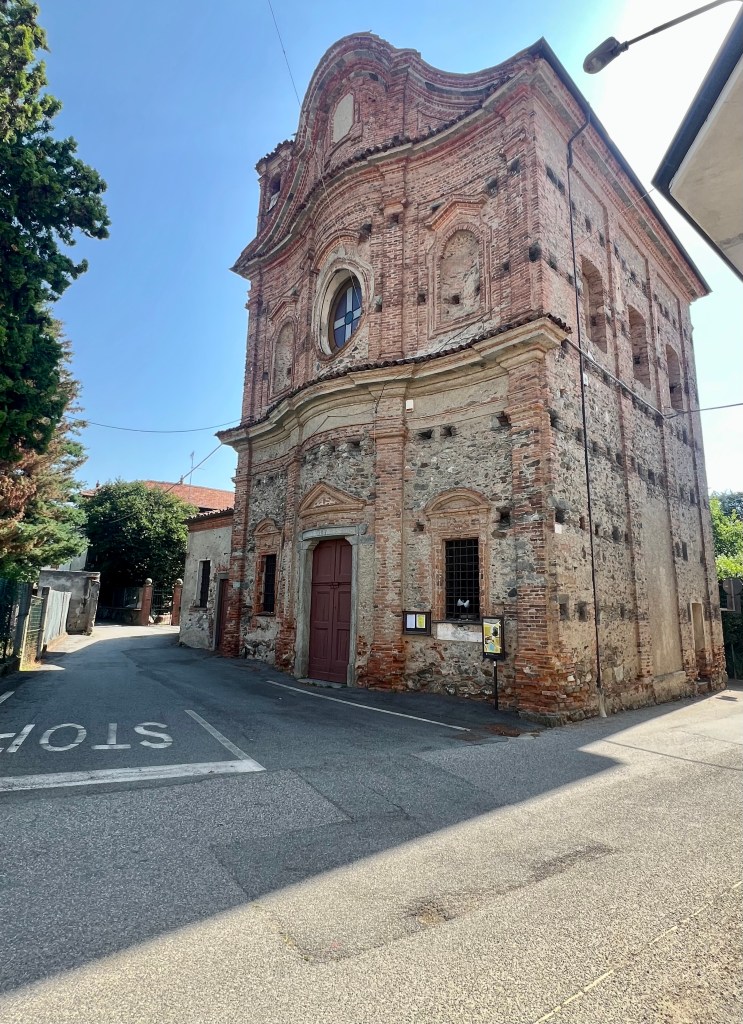
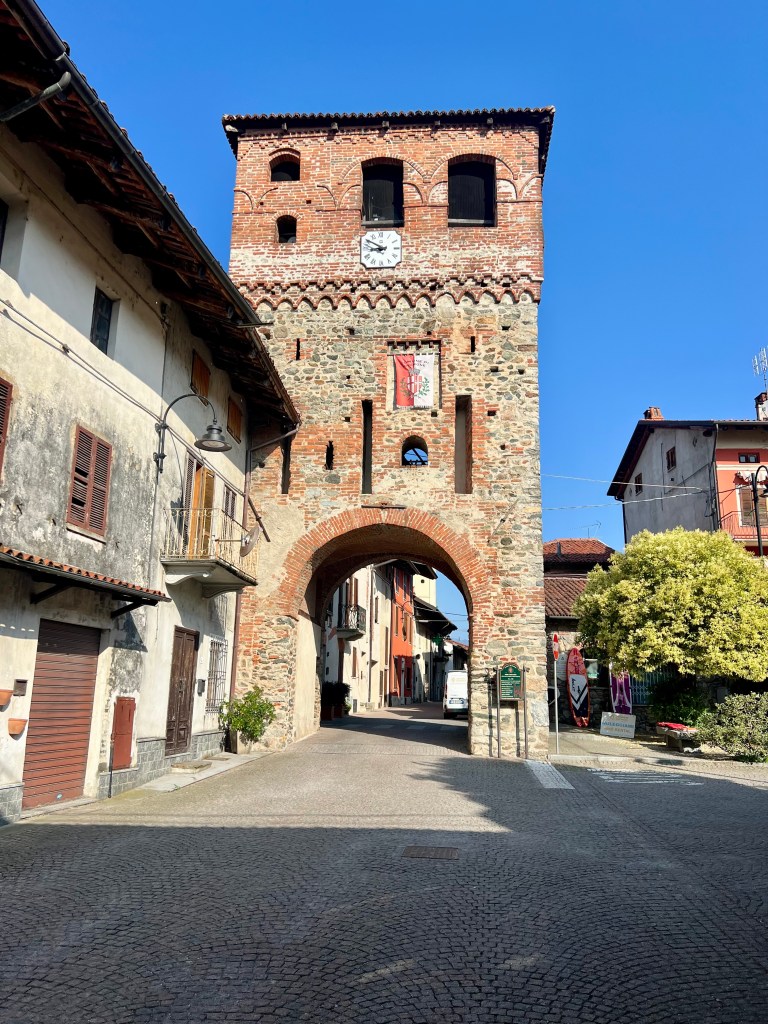
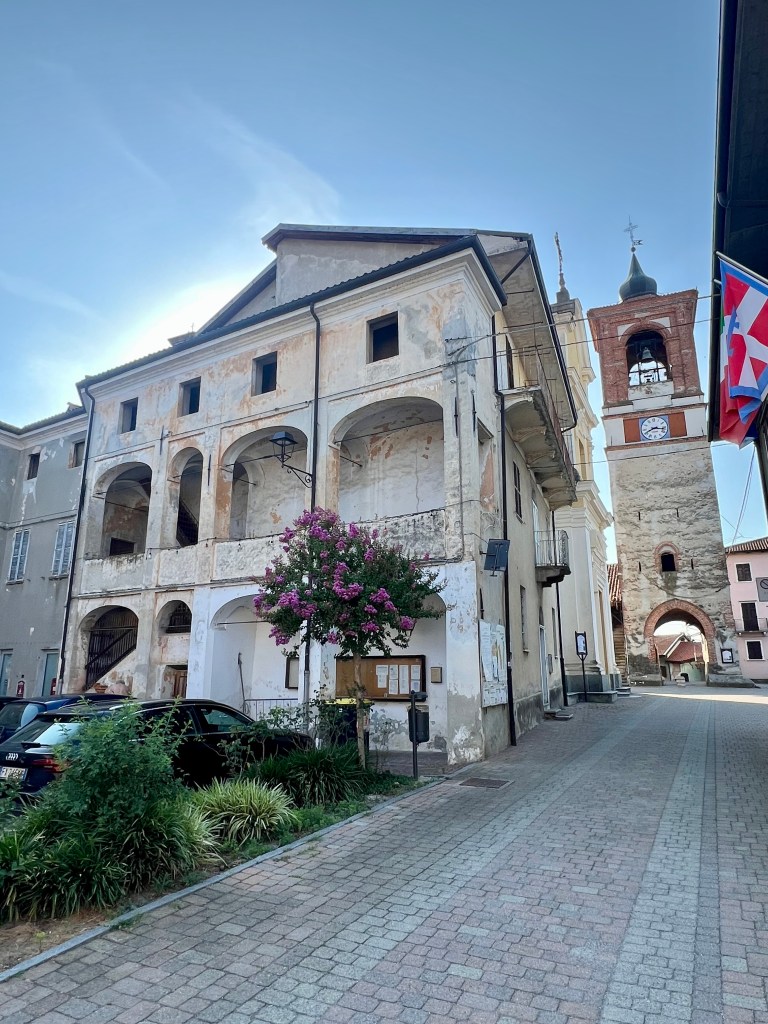
Santhià’s roots stretch back to the Roman Empire and it has long been an important stop for travelers. Although it has evolved over the centuries, the town retains its historical charm, with medieval buildings dotting the landscape. But there’s a noticeable shift here, too—Santhià has an industrial feel, with its manufacturing and commercial spaces standing in contrast to the older buildings. This blend of the old and new gives the town a unique atmosphere, where history and modernity coexist in harmony.
One noticeable change: I’m beginning to meet more fellow walkers and hikers. There’s a quiet camaraderie in the shared “buongiorno,” the nods of recognition, and the clink of glasses at the end of a long day. The road feels less lonely now, and that’s a welcome shift.
Final Thoughts
Today was hot and grueling. From mountain woods to lakeside vistas and into the agricultural heartland of the Po Valley, I’ve witnessed the incredible contrasts of Northern Italy.
Another first for me! I tried to explore the town of Santhià, but the heat was so intense that I couldn’t even make it down the street! I returned to the hotel, exhausted but content. I’ll need to watch the weather closely in the days ahead.






 Lord Colliers Active Retirement Life
Leave a comment